Industrial Bread Maker boosts production with faster baking, consistent quality, and efficient output, helping modern bakeries grow profits.
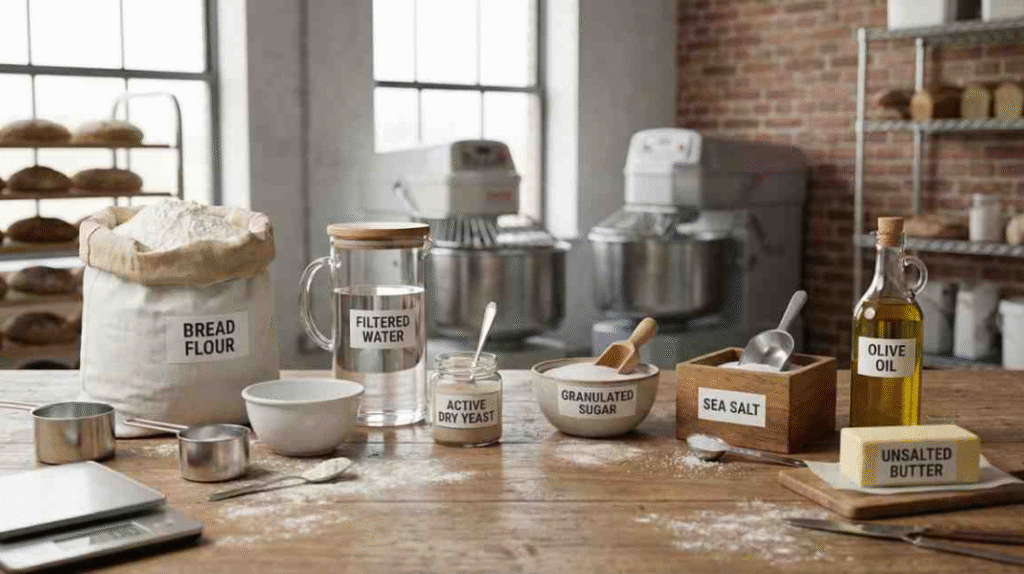
Ingredients Needed for Bread Production
| Ingredient | Purpose | Typical Amount |
|---|---|---|
| Flour | Main ingredient for bread | 5 – 10 kg |
| Water | Helps form dough | 3 – 6 liters |
| Yeast | Helps dough rise | 100 – 200 g |
| Sugar | Adds flavor and helps yeast work | 200 – 400 g |
| Salt | Improves taste | 100 – 150 g |
| Oil or Butter | Makes bread soft | 200 – 300 g |
Industrial Bread Maker: A Powerful Tool for Modern Bakeries
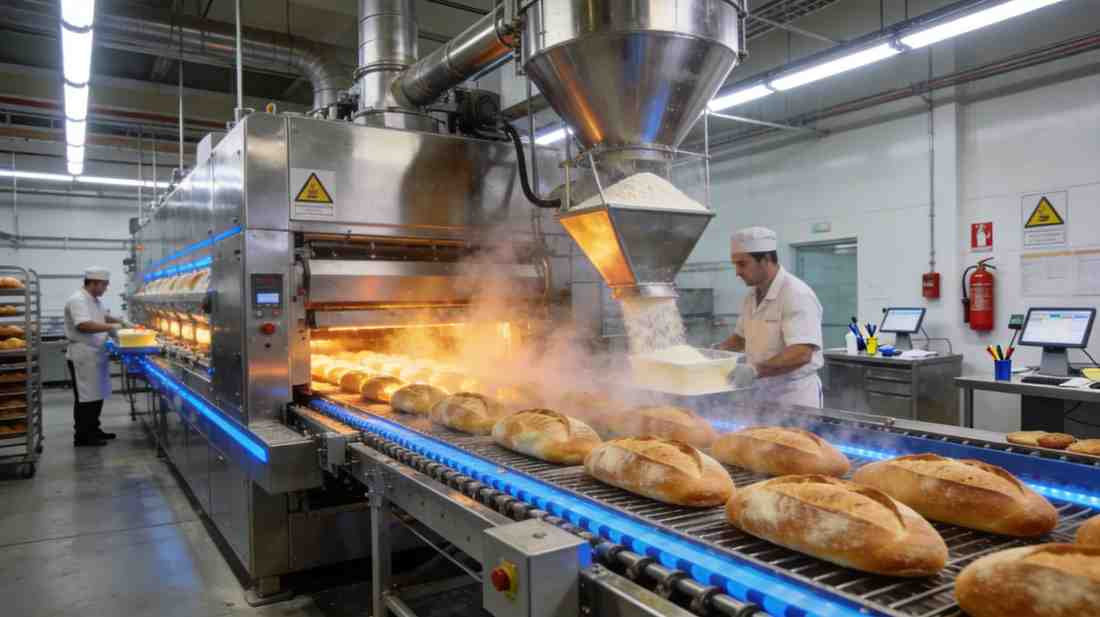
An Industrial Bread Maker is a large machine used in commercial bakeries and food factories. It can prepare hundreds or even thousands of loaves every day.
Unlike small home bread machines, an Industrial Bread Maker is built for heavy production. It has strong motors, large mixing bowls, and automatic baking systems.
Key Features of an Industrial Bread Maker
| Feature | Benefit |
| Large capacity | Produces more bread at once |
| Automatic mixing | Saves time and labor |
| Temperature control | Ensures perfect baking |
| Fast operation | Increases production speed |
| Consistent results | Every loaf looks the same |
Because of these features, many bakeries depend on Industrial Bread Maker machines for daily production.
1. Faster Bread Production
One of the biggest benefits of using an Industrial Bread Maker is speed.
Traditional bread making includes many steps:
- Mixing ingredients
- Kneading dough
- Letting dough rise
- Baking bread
This process can take many hours when done manually.
However, an Industrial Bread Maker completes these steps automatically. The machine can mix dough in minutes and prepare large batches quickly.
Production Comparison
| Method | Time Required | Bread Output |
| Manual baking | 3 – 4 hours | Small batches |
| Industrial Bread Maker | 1 – 2 hours | Large batches |
This means bakeries can produce more bread in less time.
2. Reduces Labor Cost
Hiring many workers for bread production can be expensive. Workers must mix dough, knead it, and monitor the baking process.
With an Industrial Bread Maker, many of these tasks are automatic.
3. Consistent Bread Quality
Customers want bread that tastes the same every day. When bread is made by hand, the results may change because each baker works differently.
An Industrial Bread Maker solves this problem by using automatic settings.
Benefits of Consistency
- Same taste
- Same texture
- Same size
- Same color
The machine follows the same recipe and process each time, so every loaf looks and tastes perfect.
4. Large Scale Production
Large bakeries and supermarkets need thousands of bread loaves daily. Manual baking cannot keep up with this demand.
An Industrial Bread Maker is designed for high-volume production.
Production Capacity Example
| Bakery Type | Daily Bread Production |
| Small bakery | 200 – 500 loaves |
| Medium bakery | 500 – 2000 loaves |
| Large bakery using Industrial Bread Maker | 5000+ loaves |
Because of this high capacity, many commercial bakeries choose industrial bread machines.
5. Saves Time and Energy
Time is very important in the food industry. Businesses want to produce food quickly and efficiently.
An Industrial Bread Maker helps save both time and energy.
Time Saving Steps
- Add ingredients into the machine
- Select the program
- Start the machine
- Bread is ready automatically
This simple process allows bakery staff to focus on other tasks, like packaging and delivery.
6. Easy Operation and User-Friendly Design
Many people think industrial machines are hard to use, but modern Industrial Bread Maker machines are actually very simple.
They come with digital control panels and pre-set programs.
Typical Machine Controls
| Control | Function |
| Start Button | Begins the process |
| Timer | Controls baking time |
| Temperature Setting | Adjusts heat level |
| Dough Program | Special dough mode |
Even new workers can learn to use the machine very quickly.
7. Improves Business Growth
Using an Industrial Bread Maker can help bakeries grow faster.
When production increases, bakeries can:
- Supply more shops and supermarkets
- Accept large orders
- Expand their business market
Business Growth Benefits
| Benefit | Result |
| Higher production | More bread to sell |
| Better quality | Happy customers |
| Lower costs | Higher profits |
This is why many successful bakeries invest in industrial bakery equipment.
8. Better Hygiene and Food Safety
Food safety is very important in the baking industry. Manual bread production may involve too much human contact, which can increase contamination risk.
An Industrial Bread Maker keeps the process clean and controlled.
Hygiene Benefits
- Closed mixing system
- Stainless steel parts
- Easy cleaning
- Reduced human contact
This helps bakeries maintain high food safety standards.
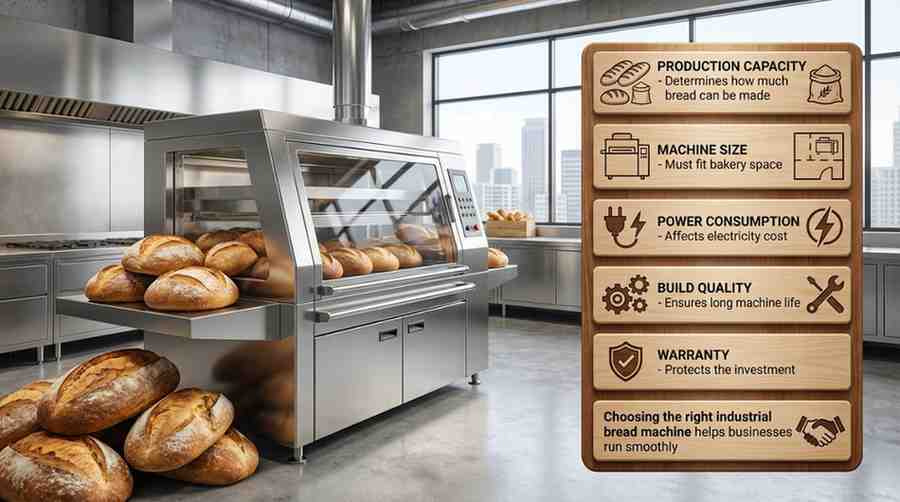
Tips for Choosing the Best Industrial Bread Maker
If a bakery wants to buy an Industrial Bread Maker, it should consider several factors.
| Factor | Why It Matters |
| Production capacity | Determines how much bread can be made |
| Machine size | Must fit bakery space |
| Power consumption | Affects electricity cost |
| Build quality | Ensures long machine life |
| Warranty | Protects the investment |
Choosing the right industrial bread machine helps businesses run smoothly.
FAQs About Industrial Bread Maker
1. What is an Industrial Bread Maker?
An Industrial Bread Maker is a large machine used in commercial bakeries to mix, knead, and bake bread automatically. It helps produce large amounts of bread quickly.
2. How much bread can an industrial bread machine produce?
Depending on the model, an Industrial Bread Maker can produce hundreds or thousands of loaves per day.
3. Is an industrial bread maker easy to operate?
Yes. Most industrial bread machines have simple control panels and automatic programs, making them easy to use.