
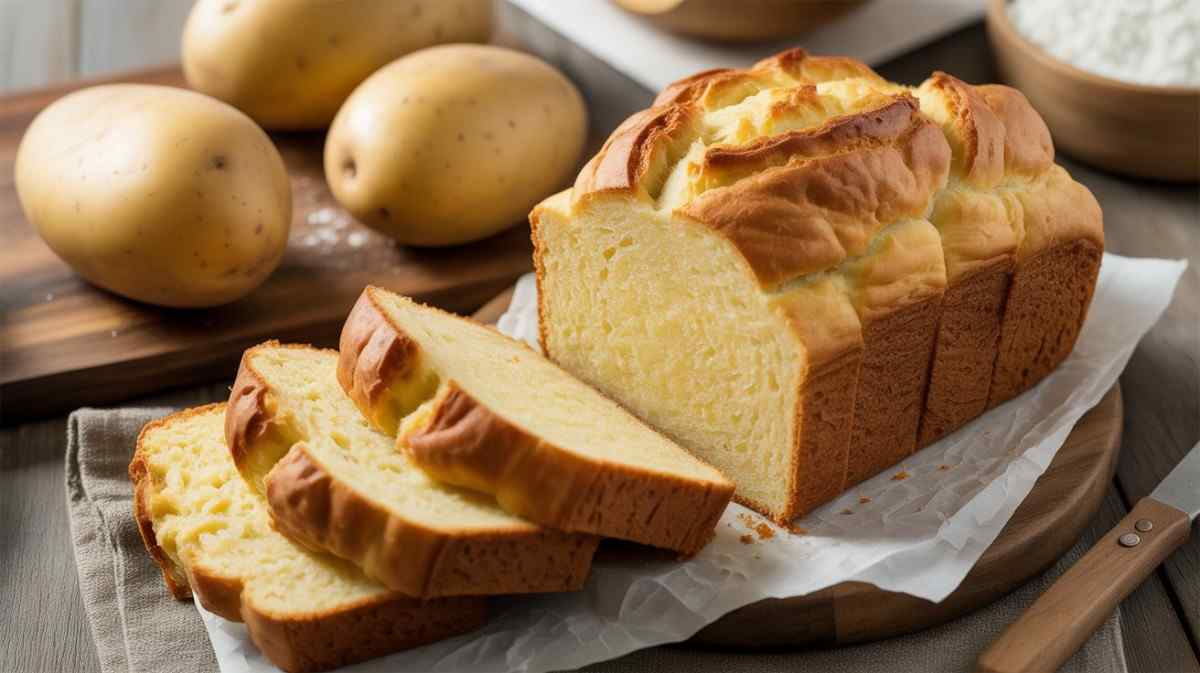
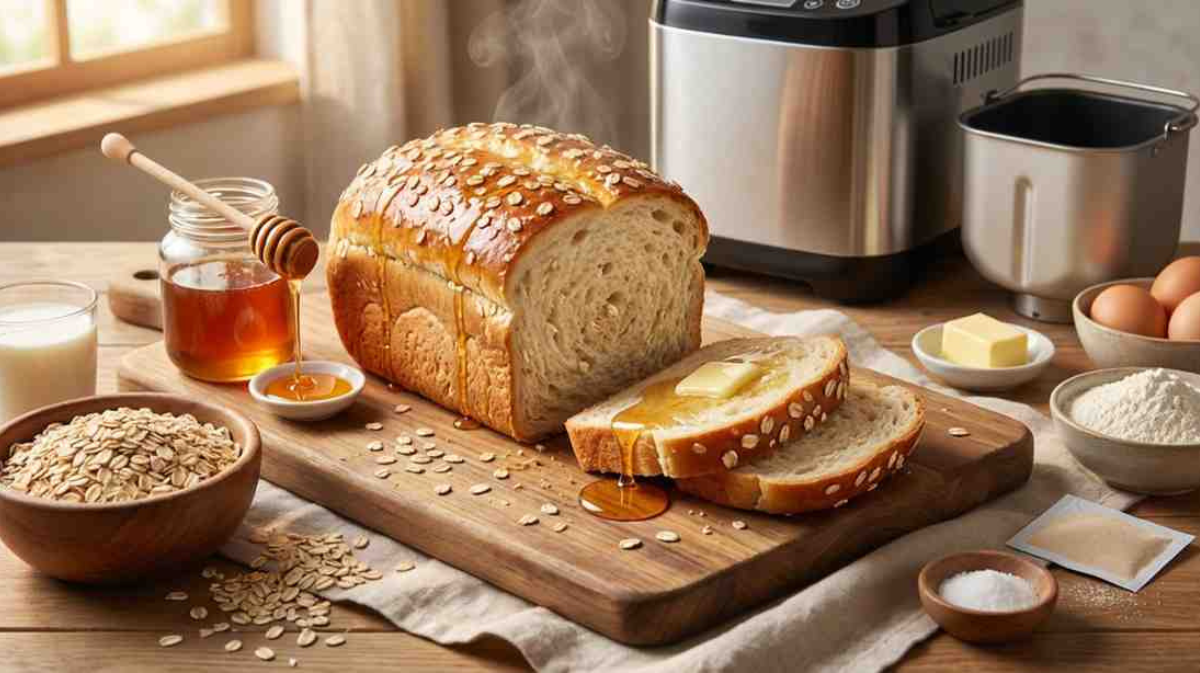
Ingredients like mashed potatoes, flour, yeast, and butter make this Potato Bread Recipe soft, fluffy, and delicious perfect for sandwiches or toast.
Introduction
Bake the ultimate loaf with this Potato Bread Recipe. Adding mashed potatoes makes the bread incredibly moist, flavorful, and long-lasting.
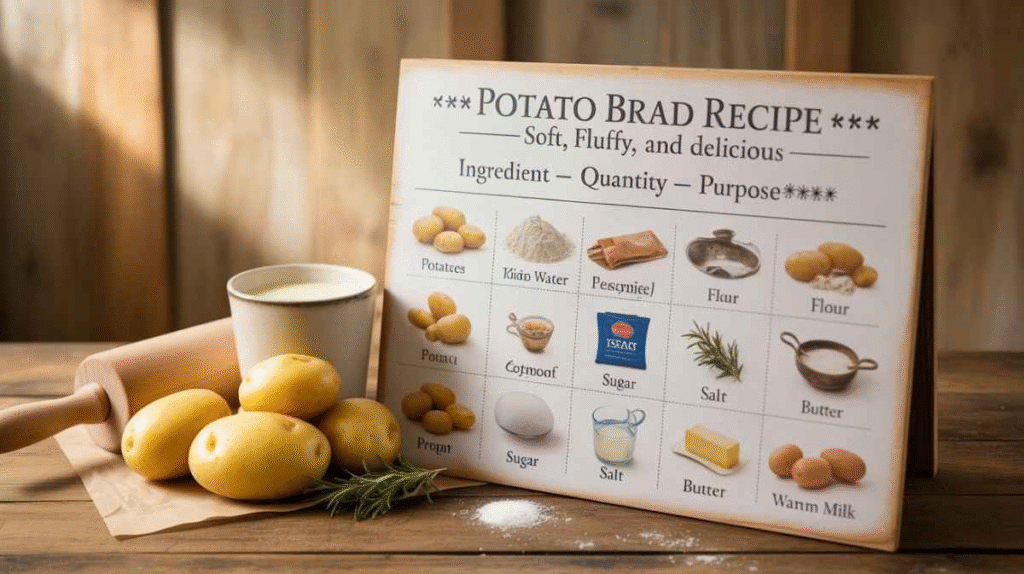
Ingredients Potato Bread Recipe
| Ingredient | Quantity | Purpose |
|---|---|---|
| Potatoes (boiled & mashed) | 2 medium (about 1 cup) | Add moisture and keep bread soft & fluffy |
| Potato Water | ½ cup | Boosts flavor and helps in gluten development |
| All-Purpose Flour | 4 cups | Provides structure to the bread |
| Active Dry Yeast | 2 ¼ tsp (1 packet) | Makes the dough rise and creates light texture |
| Sugar | 1 tbsp | Feeds the yeast and adds slight sweetness |
| Salt | 2 tsp | Balances flavor and controls yeast activity |
| Unsalted Butter | 2 tbsp (softened) | Adds richness and keeps the loaf tender |
| Warm Milk | ½ cup | Enhances flavor and improves dough texture |
Step-by-Step Method
| Step | Action | Result |
|---|---|---|
| 1 | Boil and mash potatoes, saving ½ cup potato water | Adds moisture and keeps bread fluffy |
| 2 | Activate yeast with warm milk and sugar | Creates a foamy starter for better rise |
| 3 | Mix flour, salt, butter, mashed potatoes, and yeast mixture | Forms a soft, sticky dough |
| 4 | Knead for 8–10 minutes until smooth and elastic | Develops gluten for structure |
| 5 | Cover and let dough rise 1 hour | Dough doubles in size, becomes airy |
| 6 | Punch down, shape into a loaf, place in pan | Prepares dough for second rise |
| 7 | Let rise again for 30–40 minutes | Ensures a light, fluffy texture |
| 8 | Bake at 375°F (190°C) for 30–35 mins | Golden brown, soft potato bread is ready |
| 9 | Cool before slicing | Keeps bread moist and prevents crumbling |
Baking Tips for Perfect Potato Bread
Making a perfect potato bread requires attention to a few key details. Always use smooth mashed potatoes to avoid lumps and ensure a soft, fluffy texture. Keep your water temperature between 105 110°F for proper yeast activation. Accurate ingredient measurement is essential since potatoes add extra moisture.
Allow the dough to rise until double in size for the best lightness, and knead for 8–10 minutes to develop good structure. For a beautiful finish, brush with butter before baking and let the bread cool properly before slicing to maintain its texture.
Nutritional Value of Potato Bread (Per Slice – Approx. 40g)
| Nutrient | Amount | Why It’s Important |
|---|---|---|
| Calories | ~110 kcal | Provides energy for daily activities. |
| Carbohydrates | ~21 g | Main energy source; slow release due to potato starch. |
| Protein | ~3 g | Helps in body repair and muscle growth. |
| Fat | ~1.5 g | Small amount adds softness and flavor. |
| Fiber | ~2 g | Aids digestion and keeps you full longer. |
| Potassium | ~120 mg | Supports heart health and muscle function. |
| Sodium | ~150 mg | Maintains fluid balance; depends on added salt. |
| Iron | ~0.8 mg | Essential for healthy blood and oxygen transport. |
| Vitamin C | Trace | Potatoes add a small boost to immunity. |
Storage & Shelf Life of Potato Bread
To keep your potato bread fresh and soft, always store it properly. At room temperature, it stays fresh for 2–3 days when kept in an airtight container. In the refrigerator, the bread lasts up to 1 week without losing texture.
For longer storage, wrap it tightly and place in the freezer, where it stays good for up to 2 months. Always let the bread cool before storing to prevent moisture buildup.
Serving Ideas for Potato Bread Recipe
Soft and flavorful potato bread is perfect for many dishes. Use it to make sandwiches like grilled cheese or egg salad, or enjoy it as garlic bread with butter and herbs.
Toast it lightly and serve with jam, honey, or peanut butter for breakfast. It also pairs wonderfully as a side with soups, stews, or curries, making it a versatile choice for any meal.
Common Mistakes to Avoid in Potato Bread
Baking potato bread may seem simple, but a few small mistakes can affect the results. Adding too much water or milk makes the dough sticky and the bread dense. Always knead properly for 8–10 minutes to develop gluten; under-kneaded dough will collapse. Never skip or shorten the rising time dough needs enough proofing to get a light, fluffy crumb. Lastly, avoid cutting the bread while it’s hot; cooling allows the texture to set and prevents a gummy interior.

FAQs
- Can I use instant yeast instead of active dry yeast?
Yes, you can use instant yeast. Just mix it directly with flour and other dry ingredients, skipping the activation step.
2. How do I keep potato bread soft for longer?
Store it in an airtight container at room temperature or refrigerate it. Adding mashed potatoes already helps retain moisture for softness.
3. Can I replace all-purpose flour with whole wheat flour?
Yes, but the texture will be denser. For best results, use a 50-50 mix of all-purpose and whole wheat flour.
4. Why is my Potato Bread Recipe – Soft, Fluffy, and Delicious turning out dense instead of fluffy?
This usually happens if the dough is not kneaded enough, too much liquid is added, or rising time is rushed. Follow the steps in the Potato Bread Recipe carefully for a soft, fluffy texture.

One thought on “Potato Bread Recipe – 7 Tips Soft, Fluffy, and Delicious”